
The Tengtou miracle: A blueprint for prosperity through Chinese modernization
SOURCE China.org.cn
A report from China.org.cn
BEIJING, Feb. 10, 2026 /PRNewswire/ -- In Ningbo, a coastal city in eastern China's Zhejiang province, sits a small village that packs a staggering economic punch. Spanning less than 2 square kilometers and home to fewer than 900 residents, Tengtou village recorded a GDP of 13.53 billion yuan ($1.96 billion) in 2025, with per capita net income reaching 89,000 yuan. Residents here receive a monthly benefit of 1,500 yuan, alongside lifelong coverage from pensions, health care and other social insurance programs. Honored with over 70 awards, including the U.N.'s Global 500 Roll of Honor for Environmental Achievement and the World Top 10 Harmonious Villages, Tengtou has evolved from a quiet rural community into a world-renowned blueprint for prosperity.
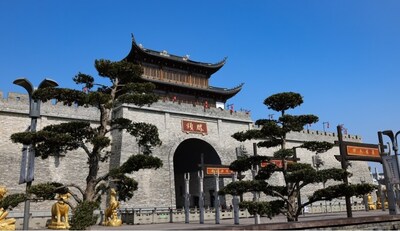
This spring, data from the village's air-quality monitoring station show PM2.5 levels below 10 micrograms per cubic meter, while green coverage reaches an impressive 70%. Little wonder that many city dwellers look on with envy at a quality of life they can only dream of.
How did this transformation come about? Beyond the unswerving efforts of generations of residents, the village's journey toward modernization has been shaped by strong Party leadership, a commitment to green development, and a focus on shared prosperity.
'Mission in crisis' reveals Tengtou spirit
The most recent chapter of this story begins with a "mission in crisis."
At the end of 2016, when Fu Qiping, then secretary of the village Party committee, suddenly fell ill, Tengtou villagers were left feeling anxious as development stalled.
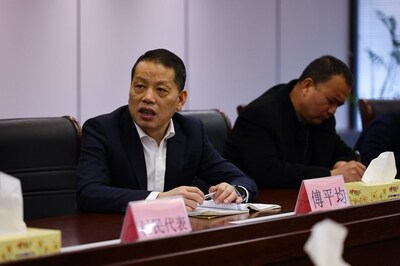
Fu Pingjun, the current Party secretary, recalled, "I took office at a time of crisis. The first task was to stabilize morale." Fu did two things: First, he solemnly promised at the villagers' meeting that none of the benefits set by the former secretary would be reduced. Second, he announced that he would not cut his hair until he had completed the targets - a gesture designed to demonstrate his commitment and resolve.
"I vowed that I'd complete specified tasks within set time frames. If not, I wouldn't cut my hair," he said. This simple pledge swiftly ignited villagers' hopes.
During those days, Fu slept only four to five hours a day, losing more than 15 kilograms in just a few months. The results spoke for themselves. After 60 days, a sightseeing train was launched; after 150 days, an agricultural innovation center was completed; and after 250 days, an ecological farmhouse flagship store and a boutique hotel opened on a trial basis. Within just months, projects were implemented and trust in leadership was restored.
Looking back, this is just part of the development history of Tengtou village, but it offers a glimpse into the unyielding spirit of its people: "Press on and keep innovating" is the mantra here.
From impoverishment to prosperity: Remaining at the forefront
Once lamented for its uneven fields and low-yielding crops, Tengtou village is now thriving, its past poverty having been transformed through steadfast determination.
In the 1960s and '70s, then village Party secretary Fu Jialiang led an initiative to improve the soil, establishing a solid foundation for growth. After the start of reform and opening up in 1978, Tengtou pragmatically pursued collective economic development. In 1990, it released a "garden village" plan that delineated Tengtou into an agricultural model park, entertainment area, sightseeing area and residential area. It also launched three projects for ensuring blue skies, clear waters and green lands.
In May 2003, then Zhejiang provincial Party secretary Xi Jinping visited Tengtou. On learning that the village had established an environmental protection committee 10 years prior, he remarked, "If a person's home is tidy and the environment is good, their confidence will improve. People change the environment, and the environment, in turn, influences people."
In June that year, Xi spearheaded the Green Rural Revival Program across Zhejiang province, a systematic overhaul targeting about 10,000 administrative villages for comprehensive improvement and transforming about 1,000 central villages into well-off demonstration villages.
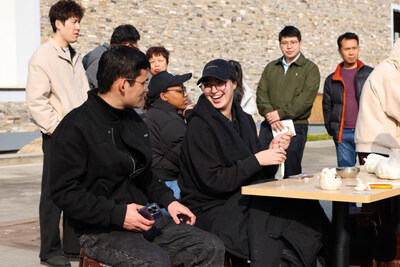
As a forerunner of the Green Rural Revival Program, Tengtou village championed subsequent initiatives. It developed distinct industries and tourism based on its environmental advantages marked by "meandering clear water, green trees and fragrant flowers." In 2007, Tengtou was named one of the World Top 10 Harmonious Villages at the U.N.'s 7th Global Forum, becoming the only village in China to receive this honor, and a prominent symbol for the world to understand China's rural development. In 2010, Tengtou was rated as a 5A-level tourist attraction, the only village-level unit in China.
What has driven Tengtou's progress?
For Fu Pingjun, the answer is clear: "Party leadership is the key! Our 258 Party members take the initiative in fulfilling President Xi's instruction: 'It's not easy to keep trees evergreen [maintain sustainable growth]; we must keep leading the way.'"
More than just green environment
The concept of "harmony between humanity and nature" lies at the heart of Chinese modernization.
From the outset of its development, Tengtou village established a firm idea: "Better to have clean waters and green mountains than profit from pollution." This principle of prioritizing the environment originated from an overseas study by village representatives, who, after observing contrasting environmental impacts - London's pollution versus Singapore's ecological beauty - realized that only lush mountains and lucid waters are true assets for future generations.

The staunch principle has allowed Tengtou village to avoid the "pollute first" path, transitioning into a paradigm where green landscapes yield sustainable prosperity. In 1993, Tengtou was recognized on the U.N.'s Global 500 Roll of Honor for Environmental Achievement, turning its ecological philosophy from ideal into reality.
Over the decades, Tengtou village has remained committed to this philosophy, embedding it into lasting institutions. It built household biogas pits in 1978, completed the village-level biogas project in 1991, and established the nation's first village-level environmental protection committee in 1993 which enforces a "one-vote veto" on potentially polluting projects. The belief that both economic and ecological matters must be considered in development is no empty slogan, but a commitment integrated into Tengtou's regulations and project plans and a philosophy passed from generation to generation.
Beyond mere preservation, Tengtou village has also found a way to bridge the gap between ecology and industry. It has turned its ecological advantages into development momentum, converting green resources into economic productivity. A prime example is the village's clean-energy lighting program.
"Once the clean-energy project comes into operation this year, electricity costs across the village will fall markedly," noted Zhong Shuijun, director of the Tengtou Village Publicity Office. "For an enterprise with annual electricity consumption exceeding 600,000 kWh, the project could save more than 100,000 yuan a year in power costs. Ordinary households will also see their electricity bills drop significantly."
The term "green" is often used to describe Tengtou, but closer observation reveals that the village is more than this - its ecology is rooted in systematic thinking that reaches across economic development, people's lives and village governance.
True wealth lies in shared prosperity, not individual growth
An important feature of Chinese modernization is prosperity for all.
Fu Pingjun's name itself signifies "common prosperity." "Our village has had three generations of secretaries," he explained. "Secretary Fu Jialiang's name implied 'good grain,' ensuring we had food to eat; Secretary Fu Qiping represented 'stable development' of collective economic enterprises; and as for me, 'Pingjun' isn't about 'equal distribution,' but about common prosperity."
The commitment that "True wealth lies in shared prosperity, not just individual growth" is emblazoned throughout Tengtou village. Chinese modernization signifies prosperity for all. Understanding this need, Tengtou has proactively transformed its development gains into a sharing mechanism after achieving affluence, contributing to the national endeavor by enabling poverty-stricken areas to help themselves rather than simply injecting help into these areas.
In 2019, Tengtou founded the nation's first village-level rural revitalization academy. Unlike conventional training which was often theoretical, the academy emphasizes a process whereby "secretaries mentor secretaries, talent drives more talent," and has so far trained over 190,000 grassroots officials and new farmers nationwide. This "cross-regional circle for shared prosperity" marks Tengtou's shift of focus from "individual prosperity" to "universal benefit."
Moreover, Tengtou village has established a loop for shared prosperity that encompasses aspiration support, capacity support and quality support. Aspiration support involves inspiring partner villages with Tengtou's adversity-defying development story; capacity support involves arousing their inner drive and building their development capacity through talent training and rural revitalization packages; and quality support involves establishing common prosperity funds and linking resources to help regional products like Hebei mineral water, Qianxinan preserved meats and Liangshan ethnic garments to engage with consumers and businesses.
This form of assistance rejects transplanting the Tengtou model, and instead emphasizes compatibility by considering local culture, resources and people's desires to ensure projects can be implemented locally and yield results. One trainee participant from Guizhou remarked, "Tengtou didn't simply give money; it taught us how to earn money ourselves."
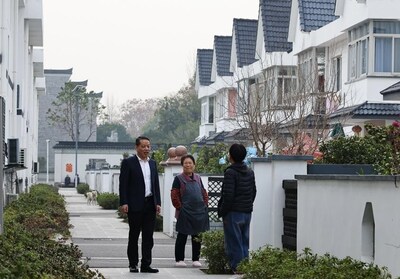
Looking ahead 20 years, Fu Pingjun envisions Tengtou emerging as a "poetic dwelling" defined by a beautiful environment and a harmonious, well-ordered community; a "land of entrepreneurship" rich in opportunity and vibrant industries; and a "smart home" that embraces future-oriented governance and AI-powered living.
"By then, our villagers' happiness, health and sense of fulfillment will be regarded as advanced by international standards," Fu said.
Fu's vision transcends Tengtou's future and envisions a vibrant illustration of China's rural modernization. In the grand journey of Chinese modernization, Tengtou village has proved that shared prosperity is not a distant ideal but a realistic goal achievable through institutional innovation, exploration and collective endeavors.
Its tale isn't just one village's success story, but a microcosm highlighting rural China's pursuit of a prosperous, equitable and sustainable future in the new era.
 View original content to download multimedia:https://www.prnewswire.com/news-releases/the-tengtou-miracle-a-blueprint-for-prosperity-through-chinese-modernization-302684757.html

©PR Newswire. All Rights Reserved.
Information contained on this page is provided by an independent third-party content provider. XPRMedia and this Site make no warranties or representations in connection therewith. If you are affiliated with this page and would like it removed please contact [email protected]
