Little Rock, AR - Hailstorms in Arkansas leave vehicles with damage that goes beyond the scope of paintless dent repair (PDR). Bale Collision Center (Downtown) provides honest assessments and precision-based dent removal services in Little Rock, AR, to restore damaged vehicles.

When PDR Applies and When It Doesn’t
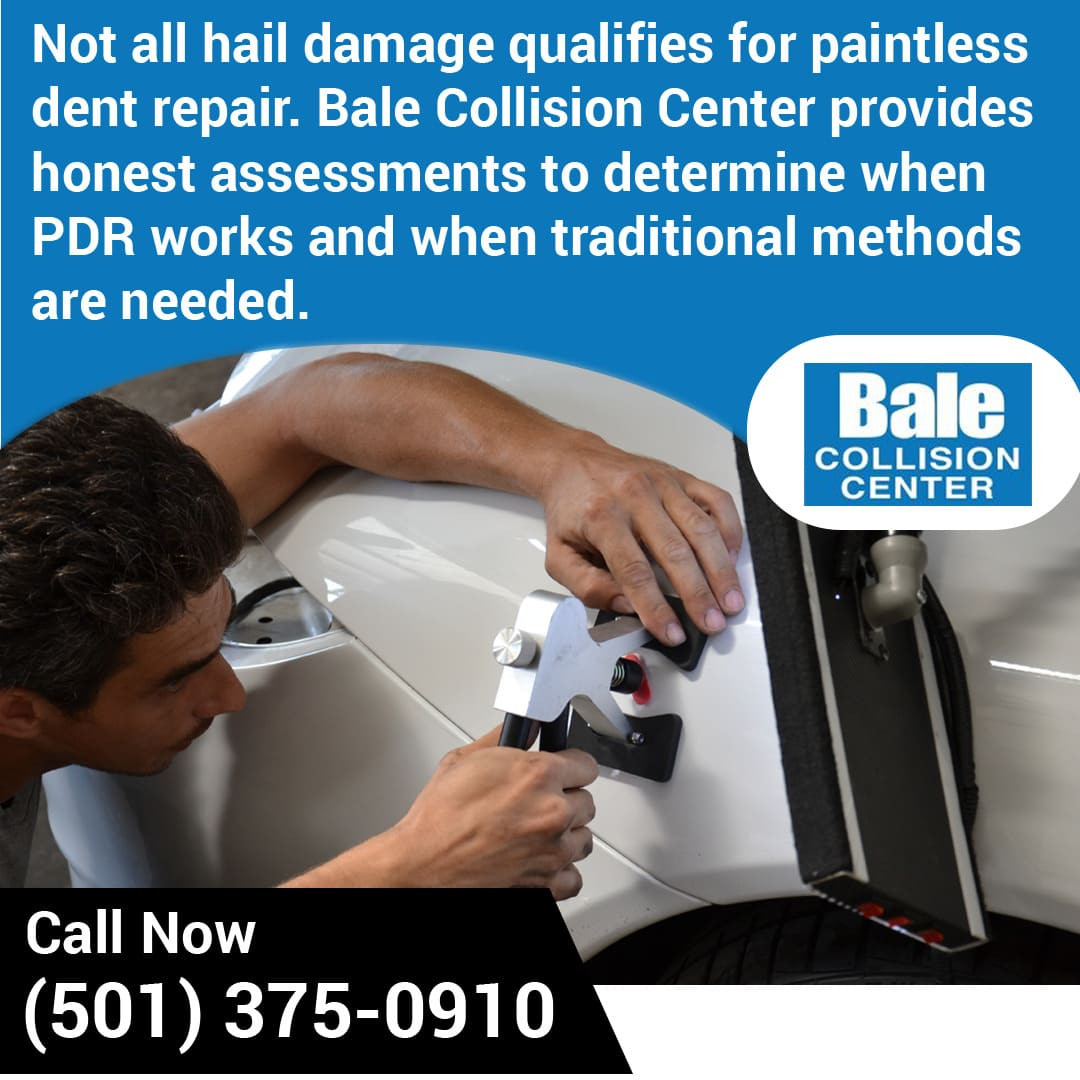
Paintless dent repair remains a highly effective method for removing minor hail dents without affecting the vehicle’s original finish. It is particularly effective when the vehicle’s paint remains intact, the metal is not stretched, and technicians have access behind the panel. This technique uses specialized tools to reshape the damaged area from inside the body without disturbing the factory paint.
Common Signs Paintless Dent Repair Isn’t Enough
Experts at Bale Collision Center cite several factors that disqualify hail dents from PDR:
- Cracked or chipped paint: Hailstones often strike at angles that crack the paint layer, especially in colder conditions where paint is more brittle.
- Stretched metal: Dents with sharp edges, creases, or visibly thinner surfaces indicate the metal has lost its shape memory and cannot return to form.
- Complex location: Dents on panel edges, body lines, or reinforced roof rails typically block tool access, making car dent removal through PDR impossible.
- Structural or sensor zones: Some dents affect safety-critical areas or Advanced Driver Assistance System (ADAS) sensor mounts, requiring structural realignment or panel replacement.
In these cases, conventional auto body repair methods, such as filling, sanding, and repainting, deliver longer-lasting and structurally sound results.
Advanced Evaluation Process at Bale Collision Center
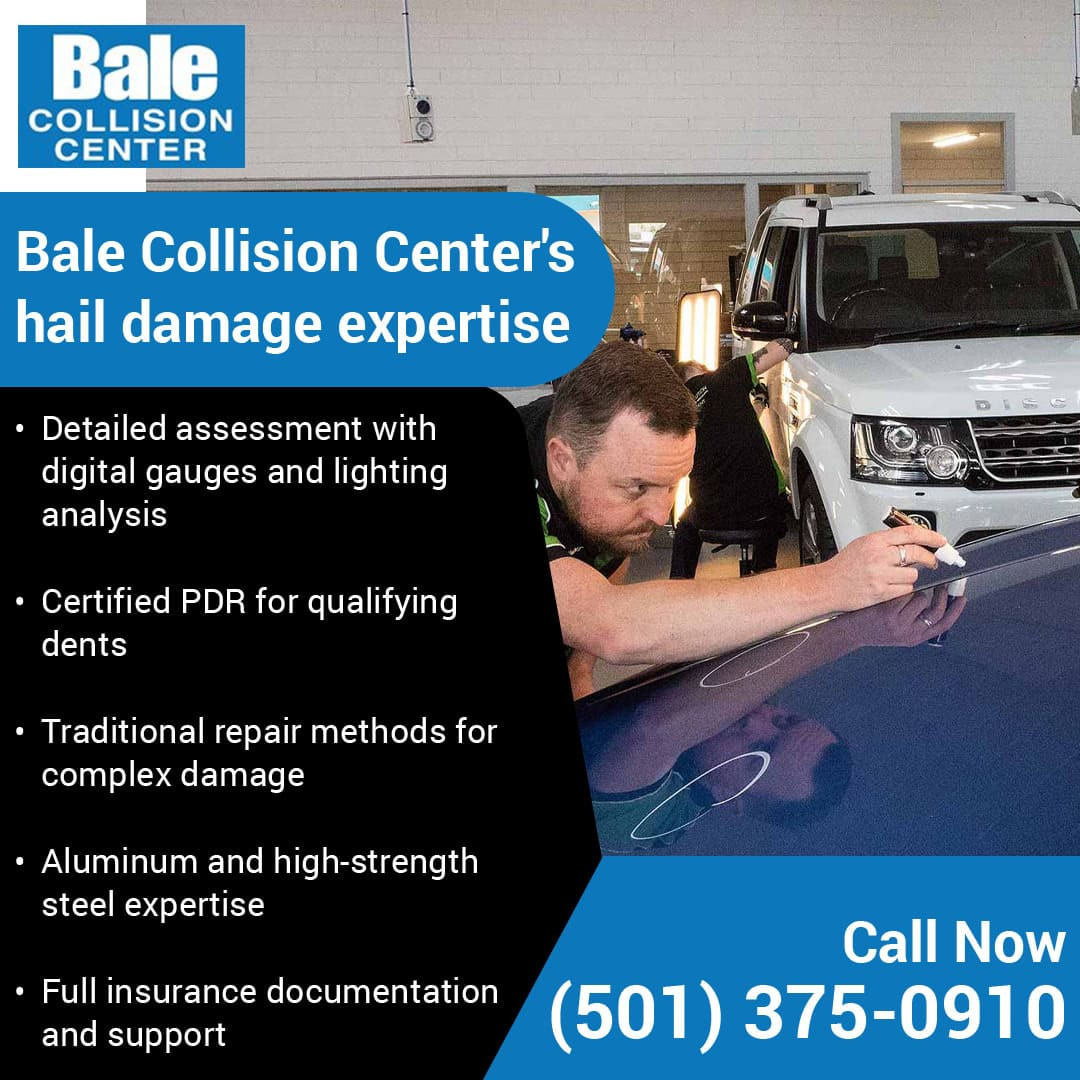
When a vehicle comes in for hail damage repair in Downtown Little Rock, AR, Bale Collision Center begins with a detailed assessment:
- Measuring dent size and depth with digital gauges
- Inspecting paint condition under different light angles
- Testing panel access for behind-the-surface tool reach
- Identifying aluminum or high-strength steel panels that affect dent response
The facility uses this information to determine which areas qualify for PDR and which require traditional dent removal services. They often create combination repair plans, preserving factory paint through PDR where possible, and applying full refinishing to damaged zones.
Aluminum and High-Strength Steel Considerations
Modern vehicles include aluminum panels or high-strength steel for weight reduction and crash safety. These materials behave differently when compared to conventional steel and often respond poorly to PDR.
Aluminum dents more easily but has lower elasticity, which means it reaches its repair threshold sooner. High-strength steel, on the other hand, resists PDR force and may require more aggressive tools or alternate repair strategies. Bale Collision Center’s technicians are trained to handle these material differences through certified PDR and structural repair protocols.
Hail Density and Total Loss Scenarios
While many hail dents are individually repairable, severe storms can produce such a high number of impacts that repair costs exceed vehicle value. Arkansas has seen hailstones larger than baseballs in recent years. Vehicles struck by hundreds of hailstones may be considered total losses by insurance providers, even if the frame and mechanical systems remain intact.
Bale Collision Center supports insurance adjusters by documenting dent counts, paint condition, and repair thresholds to justify accurate claim valuations.
When Combination Repairs Save Panels and Paint
Not every panel needs to be repainted. The combination repair approach applies PDR where paint remains intact and uses traditional methods only where needed. This strategy:
- Minimizes repainting and maintains original finish quality
- Controls costs by reducing unnecessary labor
- Ensures rust prevention and long-term durability in compromised zones
The certified PDR team works side by side with body repair specialists to complete restoration efficiently and precisely.
Insurance Support and Customer Education
Bale Collision Center works with all major insurance carriers and provides full documentation for claims. They photograph each dent, measure paint thickness, and explain why certain dents qualify, or do not qualify, for paintless dent repair. Vehicle owners are educated on their repair options, including when panel replacement is more practical than car dent removal.

Schedule a Certified PDR Evaluation in Downtown Little Rock
If your vehicle was exposed to hail, a professional inspection can confirm whether paintless dent repair or full restoration is needed. Contact Bale Collision Center at (501) 375-0910 or [email protected] for an expert evaluation and hail damage repair plan. Their team delivers complete dent removal services tailored to each vehicle’s needs.